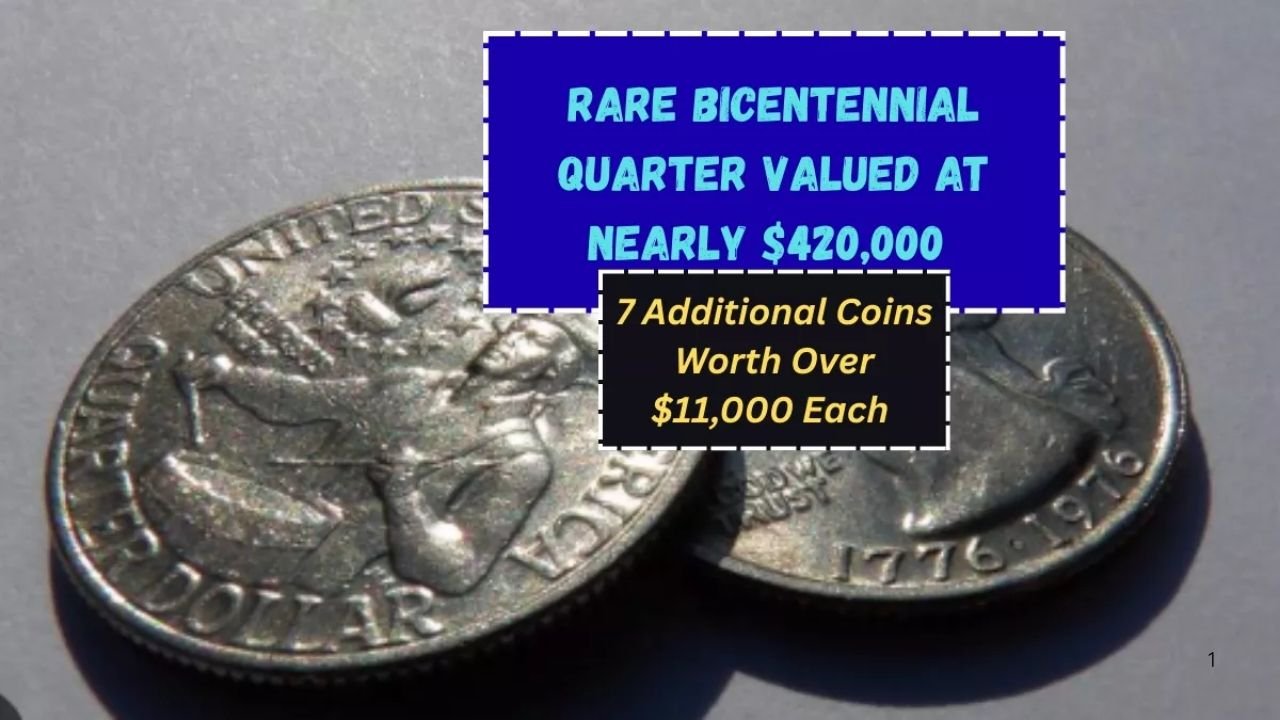
Collectors and coin enthusiasts are always on the lookout for rare U.S. quarters that can fetch significant sums. Some coins, like the 1976 Bicentennial quarter, have reached astounding values, while other historic quarters from the 19th and 20th centuries are prized for their rarity, minting errors, or limited mintage. This guide highlights eight remarkable coins valued at over $11,000, including one Bicentennial quarter worth nearly $420,000.
The $420,000 Bicentennial Quarter
The 1976 Bicentennial quarter, featuring the colonial drummer and the dual date “1776–1976,” is highly collectible.
Why It’s Valuable
- Accidentally struck on a 40% silver planchet intended for collector sets.
- Entered circulation by mistake, making it extremely rare.
- High-grade coins (MS68 or higher) dramatically increase in value.
How to Identify
- Check the edge: silver coins have a solid silver edge, unlike the copper-nickel clad version.
- Slightly heavier than standard quarters.
- Professional grading confirms authenticity and condition.
Other Rare Quarters Worth $11,000+
| Coin | Year & Mint | Mintage | Key Feature | Estimated Value |
|---|---|---|---|---|
| Washington Quarter | 1932-D | 436,800 | Denver-minted, low supply | $11,000+ |
| Liberty Seated Quarter | 1870-CC | 8,340 | Carson City mint | $11,000+ |
| Barber Quarter | 1901-S | 72,664 | San Francisco mint | $11,000+ |
| Washington Doubled Die | 1955 | N/A | Doubled die obverse | $11,000+ |
| Washington Overpolished Die | 1943 | N/A | Faint design details | $11,000+ |
| Capped Bust Overdate | 1823/2 | N/A | “3” struck over “2” | $11,000+ |
| Standing Liberty Quarter | 1916 | N/A | Low mintage, historical | $11,000+ |
Why Collectors Prize These Coins
- Rarity: Limited minting or unique errors increase value.
- Historical significance: Coins mark key periods in U.S. history.
- Minting errors: Doubled dies, overdates, and silver planchets create unique collectibles.
- Condition: High-grade coins are exponentially more valuable than circulated ones.
Tips for Identifying Valuable Coins
- Look for mint marks: “D” for Denver, “S” for San Francisco, “CC” for Carson City.
- Examine the edge and weight: Silver coins and special planchets are heavier.
- Check for errors: Doubled letters, overdates, or faint designs indicate minting mistakes.
- Use professional grading services: Authentication ensures accurate valuation.
FAQs
1. What makes the Bicentennial quarter worth $420k?
Its silver composition, rarity, and mint condition make it highly desirable to collectors.
2. How can I spot a doubled die obverse?
Look closely at inscriptions like “LIBERTY” or “IN GOD WE TRUST” for visible doubling.
3. Why are 1932-D quarters valuable?
Low mintage and historical significance from the Denver mint increase demand.

4. What is an overdate error?
A coin date shows traces of an earlier number, e.g., the “2” beneath the “3” on the 1823/2 quarter.
5. How do I authenticate a rare coin?
Use a reputable grading service like PCGS or NGC to confirm condition and originality.
Conclusion
Rare U.S. quarters, from the 1976 Bicentennial silver coin to the 1916 Standing Liberty quarter, demonstrate the value of historical coins and minting errors. Collectors prize these coins for their scarcity, condition, and unique characteristics. If you own any of these or similar coins, having them professionally graded and authenticated can reveal their true worth and ensure they are preserved for future generations.