
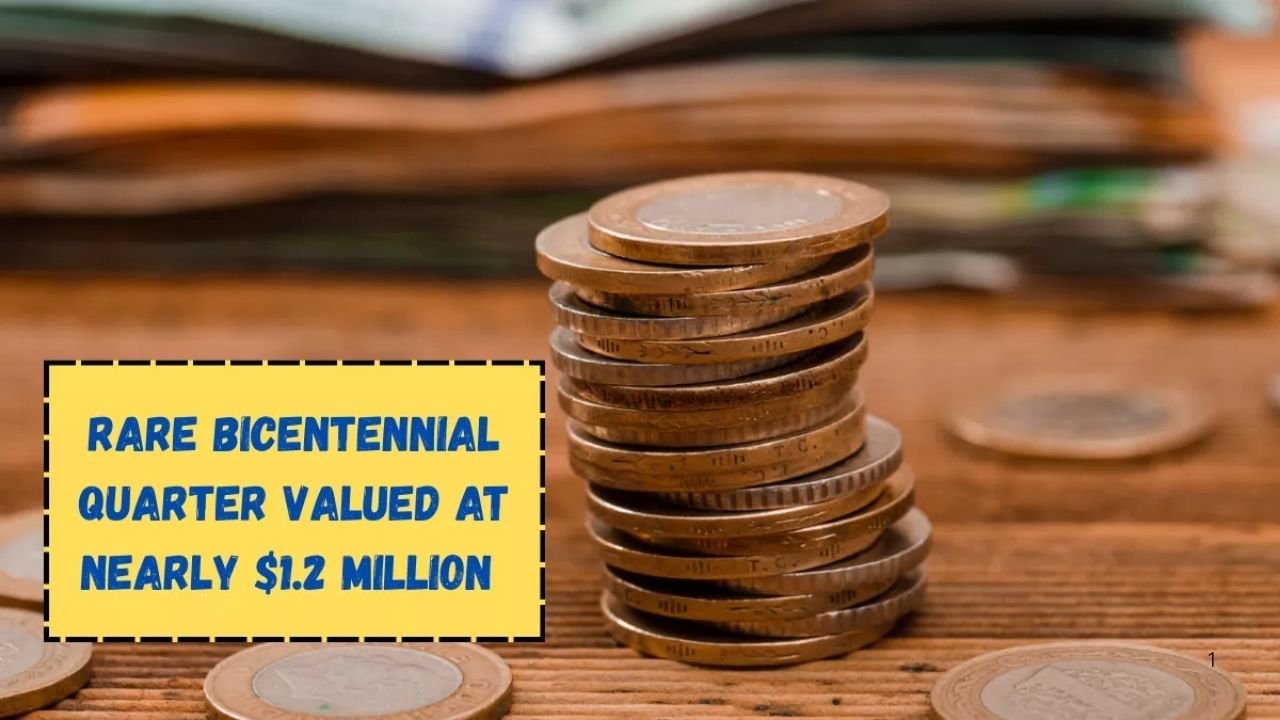
Imagine discovering a coin in your pocket that could change your life. Recently, a rare 1976 Bicentennial quarter sold for nearly $1.2 million, capturing the attention of collectors worldwide. Alongside it, three other quarters from U.S. history are valued at over $200,000 each. Here’s everything you need to know about these extraordinary coins.
The 1976 Bicentennial Quarter
Issued to commemorate America’s 200th anniversary, the Bicentennial quarter features a colonial drummer boy and a torch on its reverse. While most were made in standard copper-nickel clad, a few rare silver planchet errors were accidentally released into circulation.
Why It’s So Valuable
- Struck on a 90% silver planchet meant for collector sets.
- Entered circulation by mistake, making it extremely rare.
- Historical significance and mint condition drive its high value.
How to Identify It
- Check the weight: Silver coins are heavier than regular quarters.
- Inspect the edge: Solid silver edges indicate rarity.
- Look for mint marks: “S” coins were usually for collectors, but even unmarked silver Bicentennials can be valuable.
Other Quarters Worth Over $200,000
| Coin | Year & Mint | Mintage | Why It’s Valuable | Estimated Value |
|---|---|---|---|---|
| Washington Quarter | 1932-D | 436,800 | Rare Denver mint; historical importance | $200,000+ |
| Liberty Seated Quarter | 1870-CC | 8,340 | Extremely low mintage; survival rate low | $200,000+ |
| Barber Quarter | 1901-S | 72,664 | Limited San Francisco mint; high-grade coins | $200,000+ |
What to Look For
- 1932-D Washington Quarter: “D” mint mark under the eagle.
- 1870-CC Liberty Seated Quarter: “CC” mint mark beneath the eagle; authentication essential.
- 1901-S Barber Quarter: “S” mint mark under the eagle; minimal wear increases value.
Tips for Identifying Rare Coins
- Mint Marks Matter: Check for “D,” “S,” or “CC” to identify origin.
- Examine Weight & Edge: Silver coins are heavier and have a solid edge.
- Look for Errors: Mistakes like planchet issues or misstrikes enhance value.
- Professional Authentication: Services like NGC or PCGS confirm condition and authenticity.
FAQs
1. Why is the silver Bicentennial quarter so valuable?
Its rarity, silver composition, and historical significance make it a prized collectible.
2. How can I spot a 1932-D Washington quarter?
Check for the “D” mint mark beneath the eagle on the reverse.
3. What makes the 1870-CC quarter special?
Low mintage and survival rate make it highly sought after by collectors.

4. Where is the mint mark on a Barber quarter?
Look below the eagle on the reverse side of the coin.
5. How do I confirm authenticity?
Have the coin professionally graded and authenticated by NGC or PCGS.
Conclusion
These rare U.S. quarters are more than currency—they are historical treasures with significant monetary value. From the $1.2 million Bicentennial quarter to the high-grade 1932-D, 1870-CC, and 1901-S quarters, each coin offers a window into America’s minting history.
If you own any of these coins, consider professional authentication and grading to discover their true worth. Even coins in circulation may hold hidden value, making it worth examining your collection carefully. For collectors and investors alike, rare quarters represent a unique combination of history, craftsmanship, and potential financial reward.