
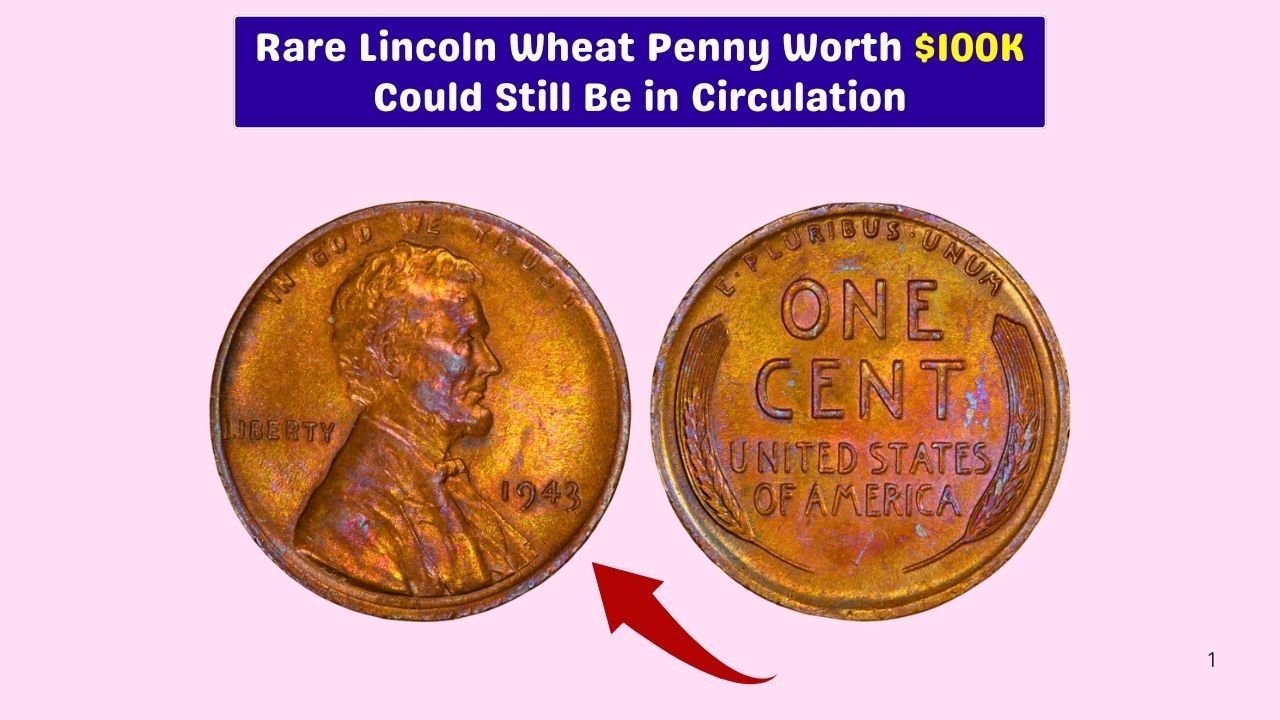
The Lincoln Wheat Penny may seem like an ordinary coin, but some rare versions have stunned collectors with jaw-dropping prices. Among them, the 1943 copper penny stands out as a tiny treasure that could fetch up to $100,000. Could one of these coins be hiding in your spare change? Let’s explore the history, rarity, and value of America’s most famous penny.
The History of the Lincoln Wheat Penny
Introduced in 1909, the Lincoln Wheat Penny marked 100 years since Abraham Lincoln’s birth. It replaced the Indian Head Penny and became the first U.S. coin to feature a real person.
- Obverse: Lincoln’s profile
- Reverse: Two wheat stalks, giving the coin its nickname
The Wheat Penny remained in production until 1958, when it was replaced by the Lincoln Memorial design. Despite its discontinuation, it has remained a collector favorite due to its historical significance and charming design.
Why the 1943 Copper Penny Is So Valuable
During World War II, copper was diverted to the war effort. In 1943, the U.S. Mint produced pennies from zinc-coated steel. However, a few copper planchets from 1942 accidentally made it into production, creating the 1943 copper Lincoln Wheat Penny.
- Rarity: Extremely low, with only a handful known to exist
- Value: $100,000 or more depending on condition
- Collector Appeal: Mistaken metal type and historical significance
Even today, a few of these rare pennies could still be hiding in jars, drawers, or coin rolls.
Other High-Value Wheat Pennies

Several other Wheat Pennies are also worth checking for:
| Year | Mint Mark | Why Valuable |
|---|---|---|
| 1909 | VDB | Designer’s initials on reverse |
| 1914 | D | Low mintage from Denver |
| 1922 | (None) | Missing mint mark error |
| 1943 | Copper | Mistaken metal type |
| 1955 | (None) | Doubled die error |
Quick Tip: Use a magnet to test 1943 pennies. Copper does not stick, steel does.
Condition Matters
Even rare coins lose value if they are damaged or worn. Collectors use a grading system:
- Poor (P-1) to Mint State (MS-70)
- Higher grades mean sharper details, better edges, and more shine
- Crisp, uncirculated coins command the highest prices
Tips for Handling Rare Coins
- Take clear photos of both sides
- Avoid cleaning or polishing the coin
- Consult a reputable coin dealer or professional appraiser
- Compare with verified listings or auction records
Some coin shops even offer free evaluations, so it’s worth checking.
Why Checking Your Change Could Pay Off
The Lincoln Wheat Penny is more than just a piece of change—it’s a slice of history. From the fields of 1909 to the minting mishaps of 1943, these coins carry stories and value that could turn a forgotten penny into a treasure.
Even if your coin isn’t the rare 1943 copper, other Wheat Pennies from key years can still fetch hundreds or thousands of dollars. A few minutes inspecting old change could lead to a rewarding discovery.
FAQs: Lincoln Wheat Penny Value
Q1: What makes the 1943 penny so valuable?
It was mistakenly made from copper instead of steel.
Q2: How can I test if a 1943 penny is steel?
Use a magnet—steel sticks, copper does not.
Q3: What does VDB on a 1909 penny mean?
It’s the initials of designer Victor David Brenner.
Q4: Should I clean an old penny?
No. Cleaning can drastically reduce its value.
Q5: Where can I sell a rare penny?
Coin dealers, auctions, and trusted online platforms are the safest options.
Conclusion
Rare Lincoln Wheat Pennies, especially the 1943 copper error, are not just coins—they’re potential fortunes and pieces of American history. Whether tucked away in a coin jar or lying in spare change, these tiny treasures could be worth thousands—or even $100,000. Take a moment to inspect your pennies; your next big discovery might be hiding in plain sight.