
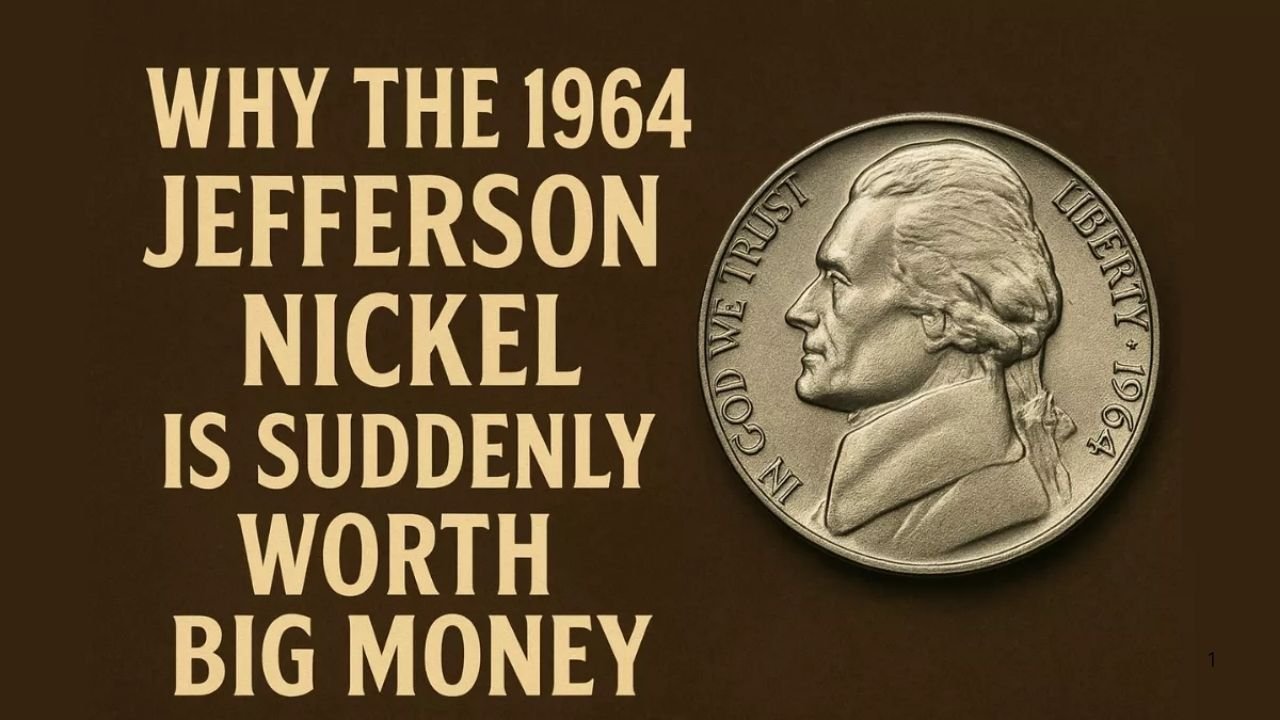
Most people think of the 1964 Jefferson Nickel as ordinary pocket change. But collectors today are paying surprising amounts for certain versions of this mid-century coin. Thanks to rare errors, unique minting quirks, and its historical timing, the 1964 nickel has become one of the most talked-about collectible coins in the U.S. market.
If you have old coins at home, this is one nickel you should definitely check.
A Quick Look at the 1964 Jefferson Nickel’s History
The Jefferson Nickel series began in 1938, replacing the iconic Buffalo Nickel. By 1964, America was experiencing a nationwide coin shortage due to rising demand and the withdrawal of silver coins from circulation.
To keep commerce running smoothly, the U.S. Mint struck more than 2.8 billion 1964 nickels across the Philadelphia and Denver mints—making it the highest-mintage nickel ever produced.
What Makes the 1964 Nickel Stand Out?
- Final year before mint marks were moved to the obverse (front) in 1968
- Huge mintage but many weak strikes
- Multiple rare errors and special varieties
- Home to exceptionally rare “Full Steps” and SMS coins
These small differences are exactly what drive big value jumps today.
Valuable 1964 Jefferson Nickel Varieties

Not all 1964 nickels are valuable, but specific varieties can sell for hundreds or even thousands. Here are the key ones to look for.
1. 1964-D Full Steps Nickel (Most Valuable Regular Strike)
“Full Steps” refers to the clearly defined steps on the Monticello building on the reverse.
Most 1964 nickels have soft, blurry steps because of worn dies—making Full Steps examples extremely rare.
Value:
- Average condition: $20 – $150
- High-grade MS65–MS67 Full Steps: $2,000 – $10,000+
2. 1964 Special Mint Set (SMS) Nickel
The rarest of all 1964 nickels, SMS coins were likely experimental trial strikes.
How to Identify SMS Nickels
- Sharp, satin-like finish
- Proof-like appearance
- No traditional proof “mirror” shine
Only a few dozen are confirmed to exist.
Value:
$5,000 – $15,000+ depending on grade
3. Mint Errors (Off-Center, Double Die & More)
1964 nickels with significant minting errors can be extremely valuable.
Common high-value errors include:
- Off-center strikes
- Double die obverse
- Clipped planchets
- Broadstrikes
Value Range:
$50 – $2,000+ depending on severity and condition
How Much Is a Regular 1964 Nickel Worth?
Most circulated coins without errors are worth only face value. But uncirculated examples still bring a premium.
| Type | Estimated Value |
|---|---|
| Circulated (common) | $0.05 – $0.25 |
| Uncirculated (MS60–MS63) | $1 – $5 |
| High Grade MS65+ | $20 – $150 |
| Full Steps (MS65+) | $2,000 – $10,000+ |
| SMS Variety | $5,000 – $15,000+ |
Why 1964 Jefferson Nickel Prices Are Rising
1. Renewed Collector Demand
More young collectors are joining the hobby through online marketplaces and social media.
2. Historical Significance
Coins from transitional years—like 1964—often grow in value over time.
3. Auction Results Creating Buzz
Record-breaking sales for Full Steps and SMS coins are fueling fresh interest.
How to Check If Your 1964 Nickel Is Valuable
Here’s what to look for:
- Step Detail: Flip the coin and check Monticello’s steps. Are they sharp and separated?
- Mintmark: “D” (Denver) versions often command higher premiums.
- Surface Quality: Unusual shine, proof-like surfaces, or satin finishes may indicate an SMS or high-grade coin.
- Errors: Use a magnifying glass to spot doubling or off-center strikes.
If your coin looks promising, consider professional grading by PCGS or NGC—high-grade certification can multiply its value.
FAQs – 1964 Jefferson Nickel Value
What makes a 1964 nickel valuable?
Full Steps strikes, SMS versions, and major mint errors are the key factors driving value.
Are 1964 nickels made of silver?
No. They are made of copper and nickel.
How do I know if I have a Full Steps nickel?
You should see 5–6 distinct steps on Monticello with no major breaks.
What is the rarest 1964 nickel?
The 1964 SMS nickel—worth up to $15,000 or more.
Where can I sell my 1964 nickel?
Reputable options include coin dealers, PCGS/NGC marketplace, Heritage Auctions, and eBay (for graded coins).
Conclusion
The 1964 Jefferson Nickel proves that even common-looking coins can hide exceptional value. With rare Full Steps varieties, mysterious SMS strikes, and valuable mint errors, this ordinary five-cent piece has become a star among collectors.