
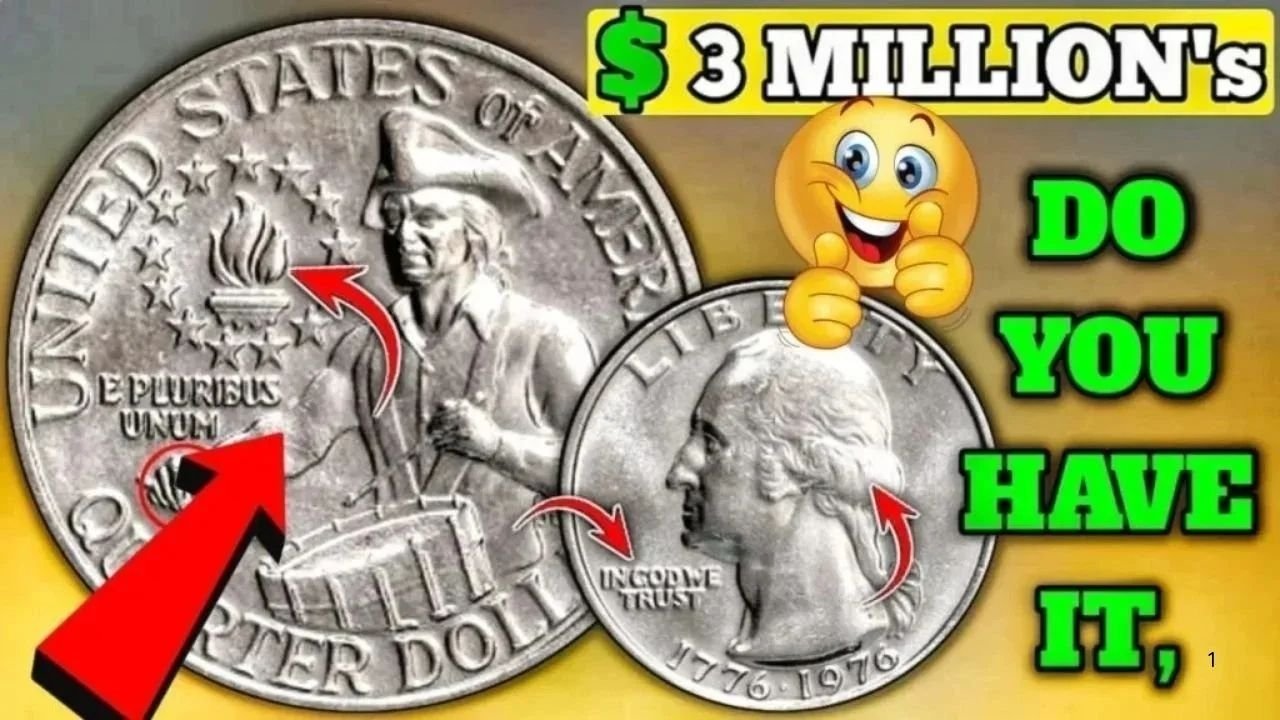
When most people think of a quarter, they picture everyday spare change. But one coin stands out for America’s 200th birthday: the 1976 Bicentennial Quarter. While millions were minted, a few extremely rare varieties are so unique that collectors value them at up to $3 million. This guide shows you how to identify these rare quarters and understand what makes them so valuable.
The History of the 1976 Bicentennial Quarter
The Bicentennial Quarter was released to celebrate the United States’ 200th anniversary of independence. Instead of the traditional eagle design, these quarters feature:
- A Colonial drummer boy
- A torch surrounded by 13 stars
- A dual date: 1776–1976
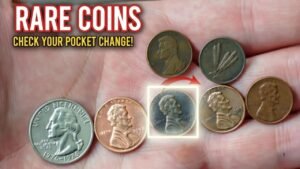
They were minted in copper-nickel for circulation and 40% silver versions for collectors, with the silver coins being far more limited.
Why Some Bicentennial Quarters Are Worth Millions
While most 1976 quarters are worth 25 cents, certain rare types or errors can command thousands—or even millions of dollars.
1. Silver Composition Errors
- Mistakenly struck on 40% silver planchets intended for proof sets
- Values can range from hundreds of thousands up to $3 million depending on condition and certification
2. Double Die Errors
- Look for doubling on letters like LIBERTY, IN GOD WE TRUST, or the drummer boy’s details
- Coins with clear doubling are highly sought after
3. Off-Center Strikes
- Minor off-center (5–10%) = modest premium
- Major off-center (30%+) = extremely rare and highly valuable
4. Proof and Uncirculated Silver Coins
- San Francisco Mint coins marked “S” exist in proof and uncirculated sets
- High-grade coins often sell for hundreds or thousands
5. High-Grade Certified Coins
- Coins graded MS-68 or higher by PCGS or NGC are extremely valuable
- Very few survive in pristine condition, making them highly collectible
How to Identify a Rare 1976 Bicentennial Quarter
Follow these steps to spot a potentially valuable quarter:
Check the Mint Mark
- S = San Francisco (silver coins likely)
- D = Denver
- No mark = Philadelphia
Inspect the Edge
- Silver coins have a solid silver color with no copper stripe
Weigh the Coin
- 40% silver coin ≈ 5.75 grams
- Copper-nickel coin ≈ 5.67 grams
Look for Errors
- Examine lettering, drummer boy, date, and rim
- Check for doubling, misalignment, or struck-through marks
Get Professional Grading
- Always send rare-looking coins to PCGS or NGC for authentication and grading
Current Market Value
Rare Bicentennial quarters, particularly silver errors, have sold for extraordinary sums.
- Some coins have been valued at $3 million, driven by scarcity, condition, and collector demand
- Even common silver-proof coins can bring strong returns if certified
FAQs About the 1976 Bicentennial Quarter
Q1: Are all 1976 Bicentennial quarters valuable?
A: No. Most are worth 25 cents, but silver errors or high-grade coins can be worth thousands or more.
Q2: How can I tell if my quarter is silver?
A: Check the edge—silver coins show a solid silver color without a copper stripe.
Q3: Where can I check my coin’s value?
A: Professional graders like PCGS or NGC provide authentication and market guidance.
Q4: Can circulated Bicentennial quarters be valuable?
A: Yes, especially if they have mint errors or unusual features.
Q5: What is the highest-known value for a rare Bicentennial quarter?
A: Some silver-strike error quarters have been valued at up to $3 million.
Conclusion
The 1976 Bicentennial Quarter is a reminder that even common coins can hide extraordinary value. With careful observation, knowledge of errors, and professional grading, you might discover a rare piece of history in your coin jar. Next time you handle a quarter, look closely—it could be worth far more than its face value.