
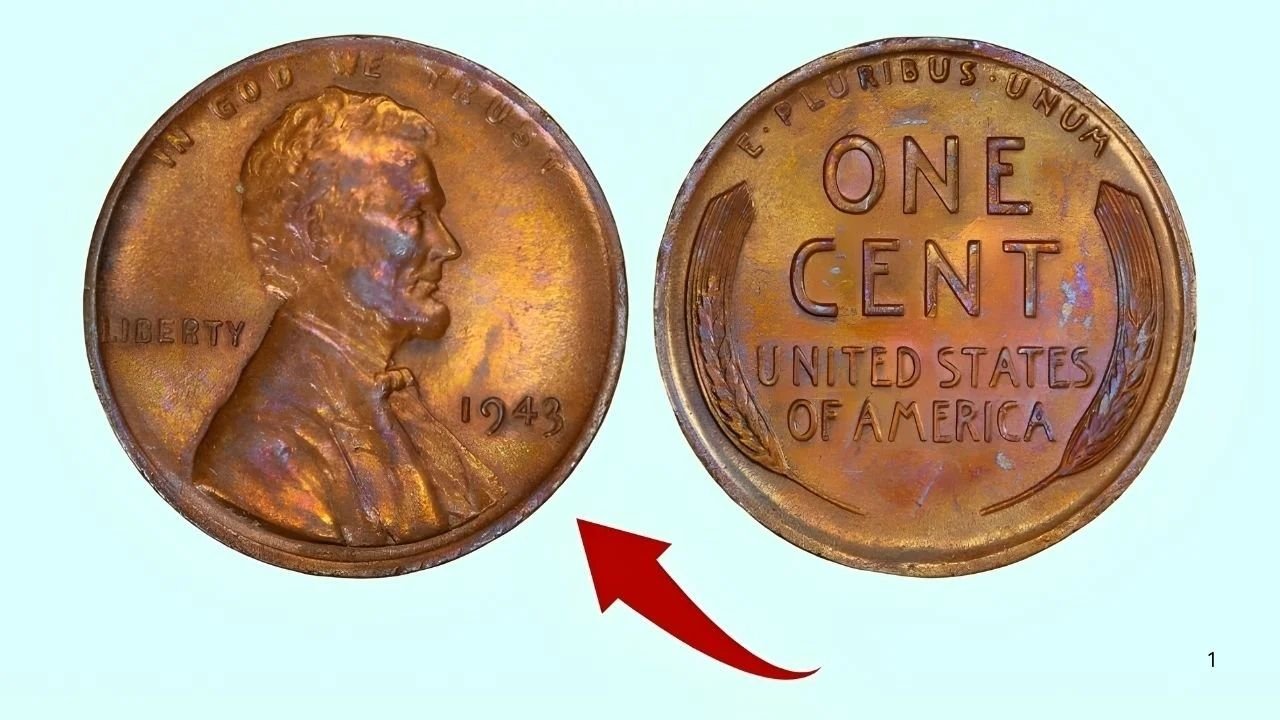
Most people think of pennies as spare change, but one 1943 Bronze Lincoln Cent recently sold for an astounding $1.7 million, proving that even the tiniest coin can become a superstar. How did a single penny—worth just one cent—reach such astronomical value? Let’s dive into the story behind this ultra-rare coin.
The 1943 Penny: A Wartime Twist
During World War II, copper was in high demand for ammunition and military equipment. To conserve copper, the U.S. Mint switched to zinc-coated steel pennies for 1943. These coins were practical but easily rusted and looked different from traditional pennies.
However, a few bronze planchets—leftover blanks intended for earlier pennies—were accidentally struck. These rare mistakes became the legendary 1943 Bronze Lincoln Cents, coveted by collectors for nearly 80 years.
Why the 1943 Bronze Penny Is So Valuable
1. Extreme Rarity
- Fewer than 20 genuine examples are known worldwide
- Scarcity drives intense collector competition, sending prices skyrocketing
2. Exceptional Condition
- Most 1943 pennies show wear or corrosion
- The $1.7 million coin was nearly flawless, making it priceless
3. Unique History
- Created during wartime as an accidental error
- Combines history, mystery, and numismatic intrigue
4. High Collector Demand
- Featured in news stories, auctions, and documentaries
- Strong global demand among serious collectors and investors
Bronze vs. Steel 1943 Pennies
| Feature | 1943 Steel Cent | 1943 Bronze Cent |
|---|---|---|
| Material | Zinc-coated steel | Bronze (copper-based) |
| Quantity | Over 1 billion | Fewer than 20 |
| Color | Silver-gray | Brown/copper |
| Magnetic? | Yes | No |
| Approximate Value | Few cents | Up to $1.7 million |
| Reason for Minting | Wartime conservation | Accidental error |
How to Spot a 1943 Bronze Penny
- Magnet test: Should not stick
- Color check: Look for brown/copper, not silver-gray
- Weight: Bronze ~3.11g; steel ~2.7g
- Authentication: Always use a professional grading service; never clean the coin
Even if you’re unlikely to own one, knowing how to identify it is part of the fun of coin collecting.
Why Collectors Love Rare Coins
Rare coins like the 1943 Bronze Cent aren’t just metal—they’re tiny pieces of history. Scarcity, artistry, and story combine to make them highly desirable. Each coin captures a moment in time, surviving mistakes, history, and decades of collecting.
FAQs About the 1943 Bronze Lincoln Cent

Q1: How many 1943 bronze pennies exist?
A: Fewer than 20 confirmed examples worldwide.
Q2: Why were most 1943 pennies steel?
A: Copper was needed for World War II, so zinc-coated steel was used.
Q3: How can I tell if my 1943 penny is bronze?
A: Check magnetism, color, and weight; always authenticate professionally.
Q4: Are there fake 1943 bronze pennies?
A: Yes, some steel cents were later coated in copper, so professional grading is crucial.
Q5: Can a 1943 bronze penny still be found?
A: Extremely rare, but a few may still appear in old collections or estates.
Conclusion
The 1943 Bronze Lincoln Cent, selling for $1.7 million, is proof that rarity, history, and story can transform a humble penny into a numismatic treasure. Next time you check your pocket change, look closely—you never know if you might be holding a piece of history worth a small fortune.