
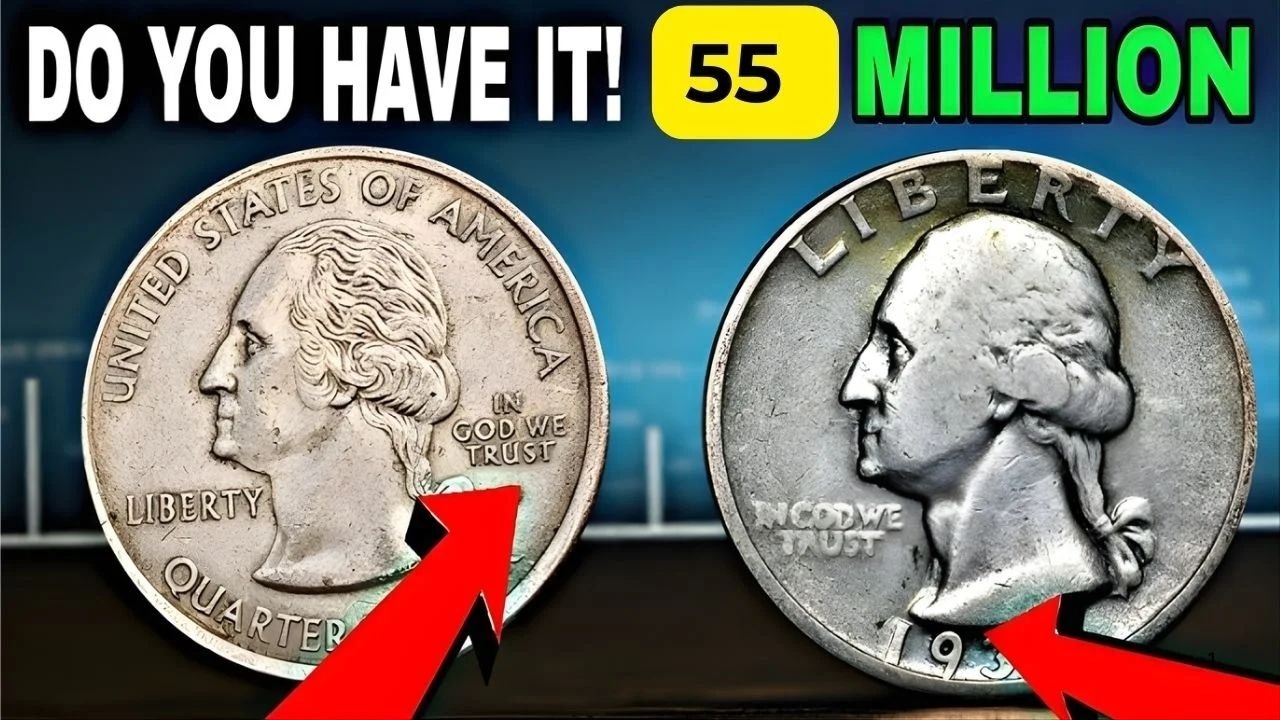
Most of us toss quarters into tip jars, vending machines, or drawers without a second thought. But what if one ordinary-looking coin was secretly worth millions of dollars? That’s the incredible story behind the Washington quarter rumored to be valued at an astonishing $55 million.
While most quarters are worth just 25 cents, a tiny fraction carry rare errors or unusual features that transform them into highly sought-after collectibles. Here’s why this legendary coin made headlines and how to spot a rare quarter in your change.
The History of the Washington Quarter
The Washington quarter was introduced in 1932 to honor George Washington’s 200th birthday. Initially meant as a one-time commemorative coin, the design became so popular that it permanently replaced the Standing Liberty quarter.
Millions of quarters have been minted over the decades, but occasionally, an extraordinary anomaly emerges—giving rise to legends like the $55 million coin.
Why a Quarter Could Be Worth Millions
Some coins gain astronomical value due to minting errors, wrong materials, or unique proof issues. Here are the most common reasons a quarter could become priceless:
1. Mule Error
A mule error occurs when a coin’s front and back don’t match.
- Example: A quarter obverse with a penny or dollar reverse
- Extremely rare, often fetching hundreds of thousands to millions
2. Wrong Metal Planchet
If a quarter is struck on the wrong metal—silver, nickel, or gold—it instantly becomes valuable.
- Example: A 1965 quarter accidentally made on a silver planchet sold for over $10,000
3. Proof Die Mistakes
Proof dies are intended for collectors, not circulation.
- If a proof die accidentally strikes a circulating coin, it produces a mirror-like finish and hybrid coin highly prized by collectors
Multiple Errors
A coin with several simultaneous anomalies can skyrocket in value, especially if it is one-of-a-kind.
Why This Quarter Became Legendary
Collectors speculate that the $55 million Washington quarter has:
- An unseen minting error
- Exceptional preservation
- A mix of error types
- Strong collector demand
Bidding wars among collectors can push the price of a unique coin to unbelievable levels, much like rare art pieces.
Could You Own a Rare Washington Quarter?
Yes—rare quarters occasionally appear in circulation. Look for:
- Key dates: 1932-D, 1932-S
- Double-die errors: Doubled letters or numbers
- Off-center or misaligned strikes
- Mule errors
- Proof-like surfaces on circulation coins
- Wrong metal planchets (silver, gold, nickel)
Value Comparison: Common vs. Rare Quarters
| Quarter Type | Typical Value | Rare Value Range | Notes |
|---|---|---|---|
| Common | $0.25 | $0.25 | Normal circulation |
| 1932-D | $100–$500 | $1,000+ | Key date rarity |
| 1965 Silver Error | $5,000+ | $10,000–$20,000 | Wrong planchet |
| Double-Die Error | $50–$500 | $1,000+ | Depends on clarity |
| Mule Error | $10,000+ | $50,000–Millions | Extremely rare |
| $55M Washington Quarter | — | $55,000,000 | Alleged one-of-a-kind |
FAQs About Rare Washington Quarters
Q1: Is the $55 million quarter real?
A: It’s widely discussed, but official confirmation is unclear. Most reports are based on rare errors and collector speculation.
Q2: Can ordinary quarters be valuable?
A: Yes—key dates, silver errors, and mule strikes can be worth hundreds or thousands.
Q3: How do I spot a mint error?
A: Look for doubling, misalignment, unusual color, or mismatched designs. Consult a certified grader if unsure.
Q4: Are pre-1965 silver quarters valuable?
A: Yes—these contain 90% silver, giving them intrinsic value above face value.
Q5: Where can I sell a rare quarter?
A: Trusted coin shops, online auctions, and certified grading services like PCGS or NGC are safest.
Conclusion
The $55 million Washington quarter proves that even the smallest coins can hold incredible value and stories. While most quarters are ordinary, spotting a rare error or unusual variation could turn your pocket change into a life-changing treasure. Check your coins carefully—your next lucky quarter might be worth far more than you think.